
The Thermodynamics of Finance
There is a theory of Artificial Intelligence that says it is a disembodied digital mind living in "the Cloud," a sort of pure mathematical spirit that will one day achieve consciousness and perhaps write better poetry than we do.
This is wrong. "The Cloud" is a shed in Northern Virginia. And AI is mostly a way to turn electricity into heat.
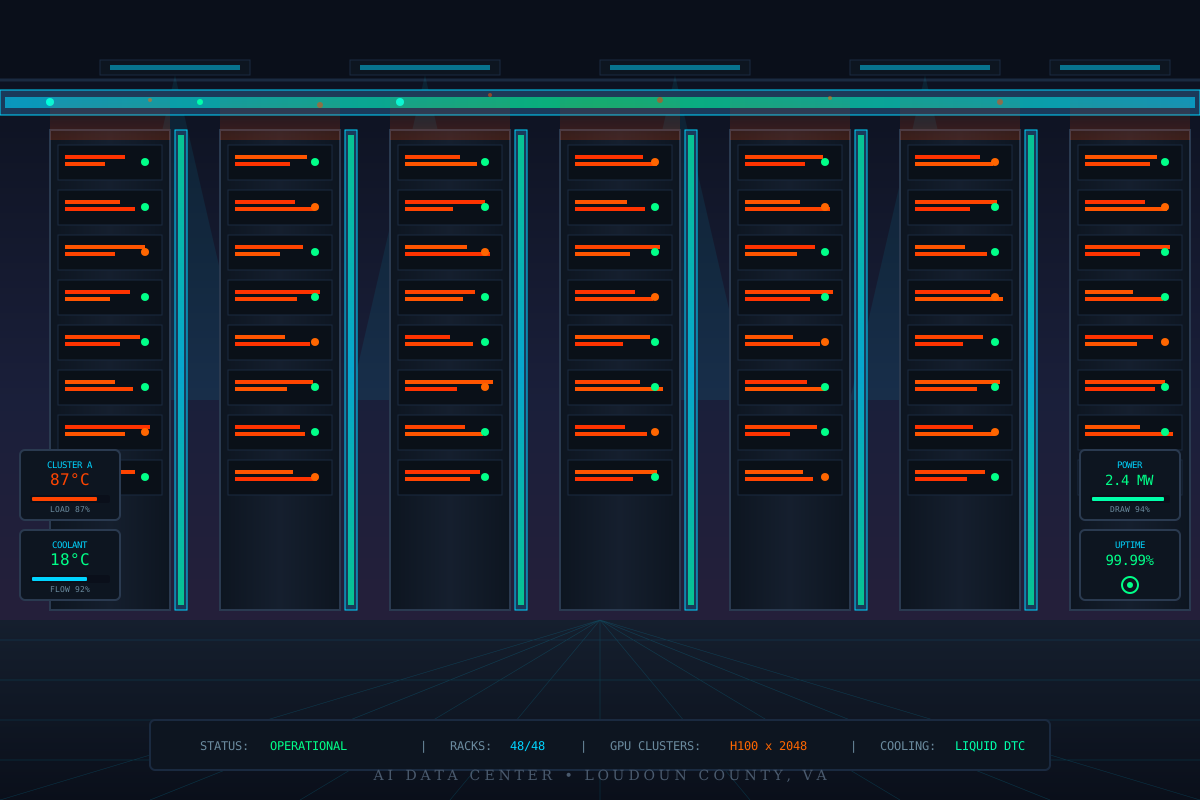
If you are a computer, "thinking" is a physical process that involves passing electrons through silicon gates. The harder you think, the more electrons you move, and the hotter you get. If you are doing a Google search in 2015, you are getting a little bit warm. If you are training GPT-6 in 2026, you are essentially operating a toaster oven that consumes as much power as a small city.
This creates a problem for the people who own the buildings where the toaster ovens live. Those people are called "Hyperscalers" (if they are Microsoft or Google) or "Digital Infrastructure Funds" (if they are Blackstone). They are currently engaged in a trillion-dollar arms race to build gigawatt-scale campuses to house the AI.
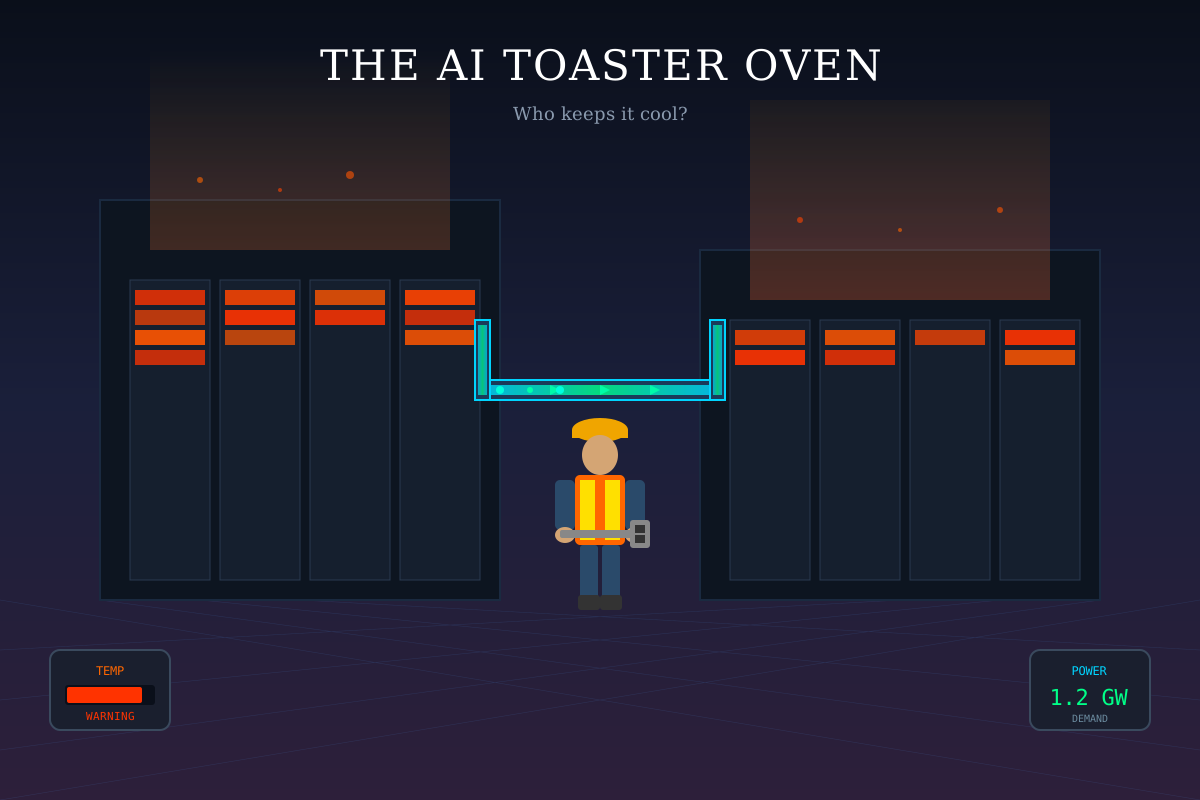
But there is a secondary problem, which is: Who is keep the AI toaster oven cool?
If you are a Private Equity Associate in the Lower Middle Market (LMM), you cannot buy a hyperscale data center. The check size is too big ($5 billion), the timeline is too long (five years), and the power queues are impossible. You are not going to outbid Larry Fink for a permit in Loudoun County.
But you can buy "Bob’s Commercial HVAC & Plumbing" in Columbus, Ohio.
And it turns out, that might be the better trade.
We Ran Out of People
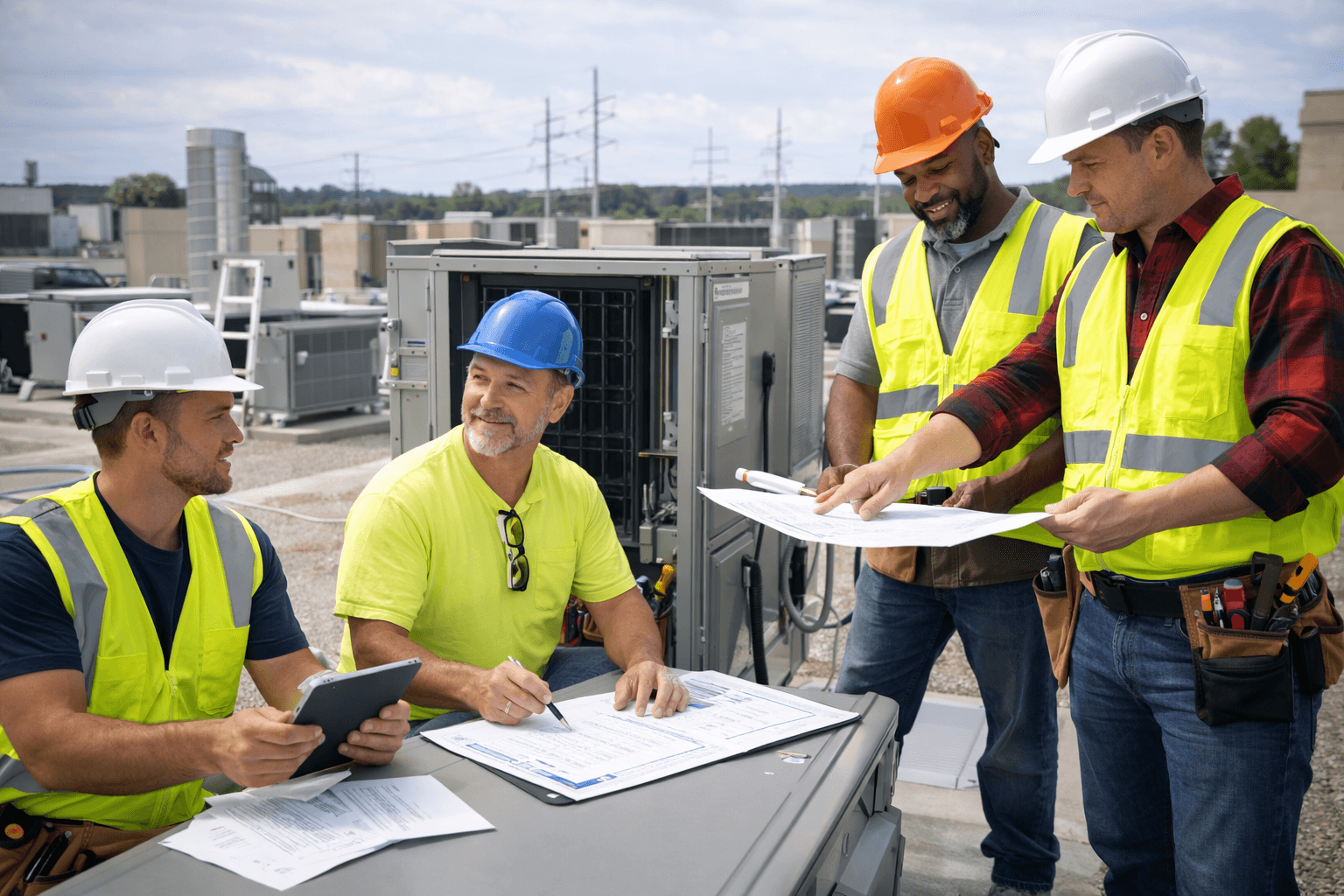
The construction and facilities industry is currently short about 439,000 workers. If you want to build a data center, you can probably get the capital and you can maybe get the chips (Jensen Huang is making more), but you cannot get the electricians and HVAC professionals.
In the "Old World" of cloud computing (three years ago), this wasn't a huge deal. The cooling systems were standard. You had a rack of servers, they got warm, you blew cold air on them with a big fan, and everyone was happy. The skill set required to fix the fan was "commercial HVAC technician." It was a good job, but it was a normal job.
In the "New World" of AI, data centers are cooled by liquid. The density of modern GPU clusters—running at 40kW to 100kW per rack—means that air cooling stops working.[1] If you blow air on an H100 cluster running at full capacity, the air just gets hot and the chip melts. So you have to pump dielectric fluid or water directly to the chip (Direct-to-Chip cooling).
The problem is that Bob’s Commercial HVAC & Plumbing does not know how to plumb a server rack with dielectric fluid. If you ask a standard technician to fix a leak in a mission-critical liquid cooling loop, and he messes it up, you don't just have a wet floor. You have a fried multimillion-dollar AI cluster and a furious call from Sam Altman.
This has created a "moat." If you are a specialized engineering firm that knows how to refurbish electrical switchgear (which currently has a lead time of 100 weeks) or install high-density cooling, you are not really a construction company anymore. You are a tech-enabler.
Things Happen
The valuation gap is the thing everyone is looking at. We have seen firms like Legence (backed by Blackstone) or Service Logic go on absolute tear-ups, buying dozens of regional players. They are not really buying the customer lists; they are buying the technicians. They are hoarding the labor supply required to keep the internet running.
It is a very specific bet on the idea that AI is not a software story, but a hardware story. And that the hardware is fragile, and hot, and needs a human being to touch it.
If you are an LMM investor, you don’t need to pick the winner of the AI model war. You just need to own the company that fixes the AC when the winner’s model gets too hot. The robots are coming for our jobs, sure. But until they learn how to hold a wrench and fix a dielectric fluid leak, the best trade in AI might just be owning the HVAC company.